
.png?width=40&height=40&name=search%201%20(1).png)
Many organizations are being forced to extend the life of existing security and monitoring tools while budgets tighten and network speeds grow.
Relying on SPAN mirroring alone creates blind spots and packet loss, limiting tool performance as traffic increases.
Adding Network TAPs and modular Network Packet Brokers boosts visibility, optimizes traffic, and improves ROI without expanding costly core NPB licenses.
Garland Technology helps teams enhance existing deployments, reduce renewal fees, and maximize the value of their current NPBs.
If you have been in IT networking long enough, you may have heard the phrase “breathe new life into old tools.” This concept is simple: security and monitoring tools only perform as well as the data they process. So solely relying on SPAN (Port mirroring) for packet visibility is well known to present issues that minimize tool performance like dropped packets and introduce blind spots. Also, as network speeds advance, tools that operate at lower speeds of 1G and 10G may become obsolete.
Therefore, feeding your tools with packets from Network TAPs ensures they perform how they were intended: processing complete packet data without loss. Also, adding Network Packet Brokers (NPB) to aggregate, load balance, and optimize the traffic, relieves any additional processing burden on the tools, allows teams to utilize those lower speed tools longer while ensuring they are running at peak performance.
As cybersecurity demands grow, as companies incorporate virtual traffic, and with the growth of higher traffic speeds and greater complexity, teams are looking to manage IT budgets more effectively. Especially trying to improve the return on investment and ultimately, increase their spend on future tool solutions and personnel.
Companies may have their core infrastructure in place, have their backbone tools and NPBs working well, but face blind spots. Likewise, there may even be performance or security issues that demand additional visibility into new segments in the network to expand their tools’ coverage. More visibility links lead to port retention on the core NPBs, leading to expansion of core NPBs and to an even larger return on investment than was originally anticipated.
Unfortunately with some NPB vendors, operation costs hide in plain sight and can be very hard to get under control. Subscription, license, and port fees increase upon the renewal of an existing NPB. This locks you in longer and potentially reducies the ROI of the initial investment.
The Garland Technology team is regularly brought into projects to add additional "TAP to Agg” visibility to existing infrastructure because:
We are the trusted leader in Network TAP innovation: if you have a unique need, we have a TAP for it.
Our Network Packet Brokers have modular flexibility: you can deploy what you need when you need it.
With Garland Technology’s help, network architects can improve not just the security and monitoring tools at the top of the stack but also breathe new life into those existing core NPBs. Best of all, saving money at the time of the NPB renewal because of reducing ports or features needed in the process.
Adding Network TAPs, NPBs, and deduplication to existing deployments is a cost-effective way to bolster the original investment while improving the solution's overall effectiveness. But how does that work, and why wouldn’t we just use the same vendor?
The demand for network visibility is only growing as teams look to secure the network. Adding packet visibility is now a critical component of any modern security and performance strategy, because simply you can’t secure what you cannot see.
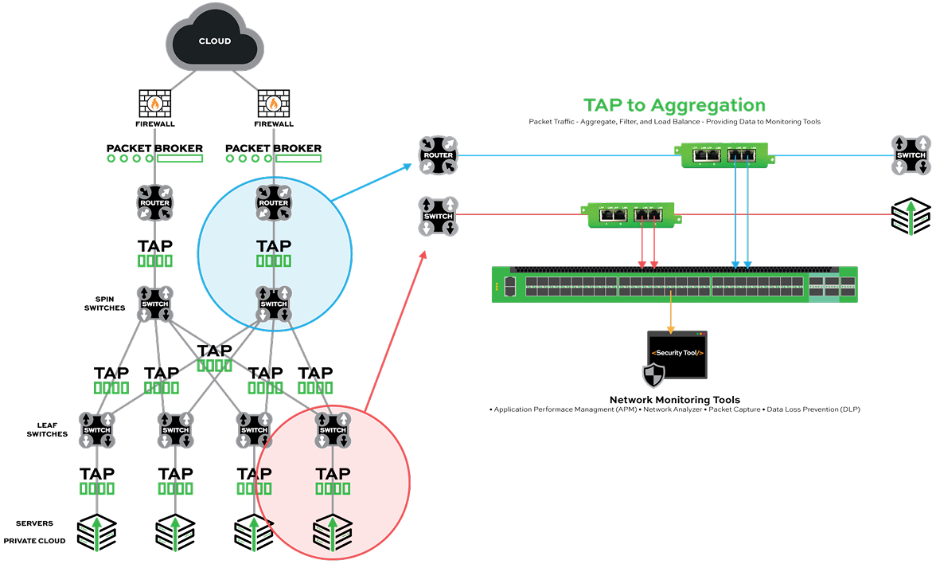
Additional visibility comes down to incorporating Network TAPs into your deployment, expanding the amount of network coverage your tools monitor.
It is common to face various challenges adding network visibility to existing infrastructure, like speed upgrades, cabling upgrades, throughput, unique media requirements, harsh environments, and the list goes on. We believe network visibility should be an easy, seamless experience. That is why teams turn to Garland Technology for their visibility hardware needs. After 15 years focused on Network TAPs, NPBs, Hardware Data Diodes, and External Bypass, we can tackle any environment or requirement to ensure you “see every bit, byte, and packet.”
What to do with those additional tapped links? Adding an aggregation layer between your TAP links and core NPBs, frees up valuable existing core NPB ports, reducing license and port fees from the existing NPB.
An aggregation layer allows you to take the traffic from the extra links down to 1 or 2 links on your existing NPB. Additional filtering and load balancing in this layer can further reduce traffic burden to the NPB and tools by up to 50%, enhancing performance.
With the rise in packet duplication, as many networks are now seeing between 30-90% of duplicate packets, it is an important function for modern NPBs. The proliferation of duplicate packers ultimately burns up NPB and tool processing utilization. Garland Technology’s approach allows you to add a stand-alone device built to take the deduplication burden off of your core NPB, reducing the costly NPB deduplication feature licensing fees.
Garland Technology’s full line of NPBs makes it cost-effective to incorporate these layers. You can add specifically what you need, whether it’s traffic aggregation or advanced features without license and port fees, ultimately reducing operation costs over time.
While many NPB vendors have shifted their focus to become a full security and monitoring platform. We are solely focused on getting wire and virtual packets to your tools. We will continue to innovate and develop Network TAPs and NPBs to enable an evolving network.
If you have Gigamon or Keysight NPBs in your network, Garland Technology can help improve your packet visibility so you can breathe new life into your existing NPB and even save yourself money if you choose to renew it.
Looking to save money at the time of your NPB renewal, but not sure where to start? Join us for a brief network Design-IT consultation or demo. No obligation - it’s what we love to do.