
.png?width=40&height=40&name=search%201%20(1).png)
Around the globe, governments and enterprises are accelerating investments in AI infrastructure. What’s happening in Australia, Singapore, Canada, and the United States is simply a microcosm of a universal trend: nations and industries everywhere are racing to build the digital foundations that will support an AI‑driven global economy.
Analyst forecasts echo this phenomenon. Massive increase in AI spending and sustained double‑digit expansion in cloud services is projected, underscoring that generative AI, high‑performance computing, and data‑intensive services are now strategic priorities worldwide.
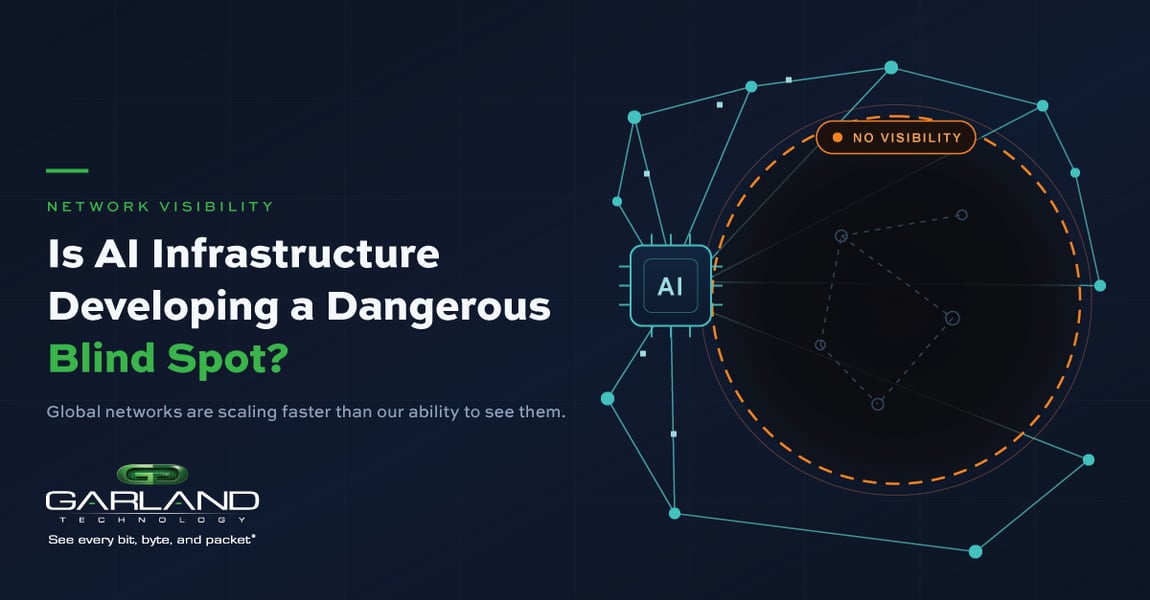
But with this scale and speed comes an under‑acknowledged risk: AI and cloud infrastructure are expanding faster than the visibility mechanisms needed to secure and monitor them. The world’s digital transformation is outpacing its ability to see what’s happening under the hood.
And that gap is becoming a blind spot.
AI services depend on enormous volumes of data moving securely and in real time. Yet modern networks – whether in New York, Frankfurt, São Paulo, or Sydney – are increasingly complex, spanning hyperscale data centers and multi‑cloud deployments. As complexity rises, full packet‑level visibility becomes harder to maintain.
When network stakeholders lose sight of the packets, they lose sight of risk:
This isn’t a regional issue. It’s a universal design challenge inherent to modern digital infrastructure.

Gartner warns that by 2028, 25% of enterprise breaches will be linked to AI agent abuse. This applies to every geographic market, every industry, and every environment where AI is used operationally.
Outages, meanwhile, already cost organizations around the world an average of US$9,000 per minute; even more for mission‑critical or regulated industries.
Even more concerning is the potential erosion of public trust. If AI‑powered services are unreliable or vulnerable, adoption slows, and the anticipated economic benefits begin to stall.
To close this widening visibility gap, organizations must rethink how they design and operate their networks. Visibility can no longer be bolted on as an afterthought. It must be embedded directly into the digital backbone.
Core visibility hardware such as Network TAPs, Hardware Data Diodes, Network Packet Brokers, and Inline Bypass systems create persistent access to packet flows without disrupting live operations.
These practices enhance resilience across global industries:
Where these approaches are implemented, they provide complete visibility, reduce security tool overload, and extend the lifespan of existing investments.
Here are practical steps you can take now to build a network visibility infrastructure:
The world is approaching a tipping point. Countries and industries have a choice: allow visibility gaps to expand and introduce costly blind spots, or build AI infrastructure that is secure, resilient, and trusted from the foundation upward.
AI may be the engine of global digital transformation, but a solid network visibility infrastructure is the only way to keep that engine safe, reliable, and trustworthy.
Looking to build a network visibility infrastructure to keep your AI platforms secure, but not sure where to start? Join us for a brief network Design-IT consultation or demo. No obligation - it’s what we love to do.